Reliable Cross-Border Shipping Solutions
UAE to Saudi freight transport plays an important role in supporting trade, business operations, and regional supply chains across the Gulf. Businesses and individuals rely on dependable freight services to move commercial goods, industrial equipment, retail products, and personal shipments from the United Arab Emirates to destinations throughout Saudi Arabia.
Whether you need to transport a full truckload, ship a few pallets, or arrange urgent cargo delivery, choosing the right freight solution can help control costs and simplify logistics. Professional freight forwarding services can also assist with transportation planning, customs documentation, shipment handling, and final delivery.
From Abu Dhabi, Dubai, and Sharjah to Riyadh, Jeddah, Dammam, and other Saudi cities, understanding your freight options can help you select a shipping method that meets your budget, cargo requirements, and delivery schedule.
What Is UAE to Saudi Freight Transport?
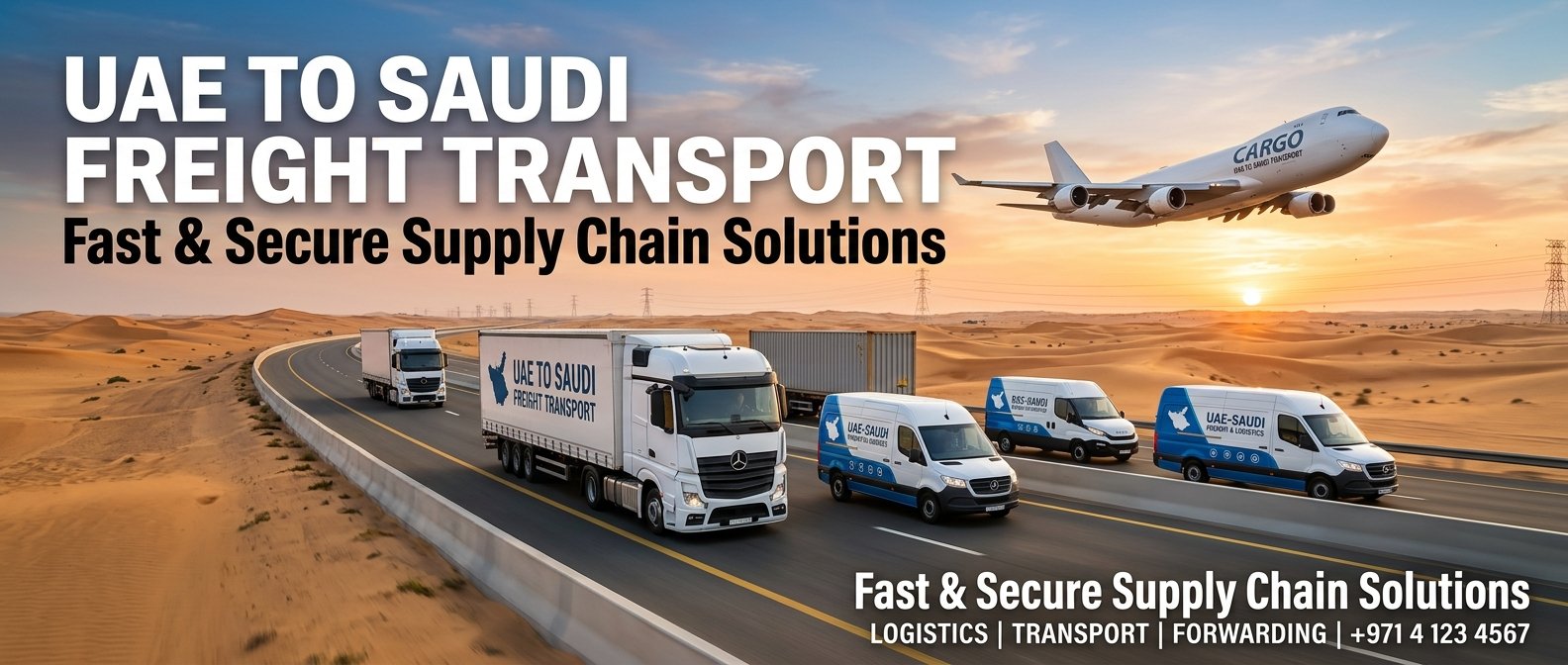
UAE to Saudi freight transport refers to the movement of goods from the United Arab Emirates to Saudi Arabia using road, air, or sea transportation. It supports businesses involved in manufacturing, construction, retail, wholesale distribution, and international trade.
Freight services can be arranged for small shipments, palletized cargo, heavy equipment, and large commercial consignments.
Common freight solutions include:
- Road freight: Suitable for many cross-border commercial shipments and door-to-door deliveries.
- Air freight: An option for urgent, time-sensitive, and suitable high-value goods.
- Sea freight: Useful for appropriate large or containerized shipments.
- Full truckload (FTL): Dedicated truck capacity for larger shipments.
- Less-than-truckload (LTL): Shared truck capacity for smaller consignments.
- Door-to-door delivery: Collection from the sender and delivery to the recipient’s address, subject to service availability.
The best option depends on the shipment’s size, weight, destination, delivery deadline, and customs requirements.
Benefits of UAE to Saudi Freight Services
Reliable freight transportation helps businesses manage inventory, meet customer expectations, and maintain efficient supply chains.
1. Efficient Cross-Border Shipping
Road freight connects major UAE commercial centres with Saudi Arabia through established land routes. This makes it a practical option for many regional shipments that require transportation without the expense of air freight.
2. Flexible Cargo Solutions
Freight companies may offer dedicated trucks, shared loads, air cargo, and container shipping. These options allow businesses to select services based on their shipment volume and delivery requirements.
3. Support for Commercial Operations
Manufacturers, distributors, retailers, construction companies, and wholesalers can use freight services to transport raw materials, finished products, spare parts, and business supplies.
4. Customs Documentation Assistance
Cross-border shipping requires accurate documentation and compliance with applicable customs procedures. An experienced freight forwarder can coordinate with customs brokers and help identify the documents or approvals needed for a particular shipment.
5. Better Cost Management
Comparing freight methods and shipment arrangements can help businesses manage transportation expenses. Consolidated cargo may suit smaller shipments, while a dedicated truck can be more practical for large loads.
Road Freight from the UAE to Saudi Arabia
Road freight is a popular option for moving commercial goods between the UAE and Saudi Arabia. It offers flexibility for different cargo sizes and can support deliveries to major business centres and industrial locations.
The main land route generally passes through the Al Ghuwaifat border area in the UAE and the Al Batha crossing in Saudi Arabia. Customs processing and transport schedules can affect the overall delivery time. <Cite refs={[“turn536939search0″,”turn536939search1”]}/>
Road freight is suitable for:
- Commercial pallets and cartons
- Retail and wholesale inventory
- Construction materials and equipment
- Industrial machinery and spare parts
- Furniture and eligible household goods
- Full truckloads and consolidated shipments
Full Truckload Freight
Full truckload freight is appropriate when a shipment requires a dedicated vehicle or occupies most of its available capacity.
Its potential advantages include fewer consolidation stops, greater control over loading arrangements, and a more direct transport schedule.
Less-Than-Truckload Freight
Less-than-truckload freight allows several compatible shipments to share truck capacity. It can be a cost-effective option for businesses that do not have enough goods to fill an entire truck.
Customers should confirm the expected departure schedule, handling arrangements, and delivery timeframe before booking.
Air Freight from the UAE to Saudi Arabia
Air freight is a suitable alternative when delivery speed is a priority. It can be used for urgent documents, product samples, selected electronics, spare parts, and other eligible goods.
Key benefits may include:
- Faster airport-to-airport transportation
- Options for time-sensitive shipments
- Suitability for smaller, high-value consignments
- Reduced transit time compared with many ground or sea routes
However, air freight can be more expensive, especially for heavy or bulky cargo. Customers should compare the complete quotation, including airport handling, customs clearance, and final delivery.
Sea Freight for UAE to Saudi Cargo
Sea freight can be a practical solution for larger consignments, containerized cargo, and shipments that do not require immediate delivery.
Depending on the cargo, destination, and available services, goods may be shipped through suitable UAE and Saudi ports before continuing to their final destination by road.
Sea freight may be appropriate for:
- Large commercial consignments
- Containerized goods
- Industrial supplies
- Bulk shipments suitable for maritime transport
- Cargo where transportation cost is a major consideration
Customers should consider port handling, container charges, customs procedures, and inland transportation when comparing sea freight with other options.
Major Saudi Destinations for Freight Transport
Professional freight arrangements may support deliveries to several important commercial and industrial locations across Saudi Arabia.
UAE to Riyadh Freight Transport
Riyadh is a major business and distribution centre. Freight services can support deliveries of retail products, commercial inventory, machinery, and industrial supplies to businesses and warehouses.
UAE to Jeddah Freight Transport
Jeddah is an important commercial destination on Saudi Arabia’s western coast. Businesses can explore road, air, and suitable sea freight arrangements depending on cargo requirements and delivery schedules.
UAE to Dammam Freight Transport
Dammam and the wider Eastern Province are important destinations for industrial, manufacturing, and commercial shipments. Freight requirements may include equipment, spare parts, construction supplies, and general merchandise.
Before arranging transportation, confirm that the provider serves the destination and can coordinate delivery to the required address.
Documents Required for UAE to Saudi Freight Transport
Correct documentation is essential for cross-border cargo movement. The specific requirements depend on the goods, customs classification, origin, and shipping method.
Common documents may include:
- Commercial invoice: Describes the goods, quantities, declared value, and transaction details.
- Packing list: Provides package counts, weights, dimensions, and contents.
- Certificate of origin: Required where applicable to establish the origin of the goods.
- Transport document: Such as a road consignment note, air waybill, or bill of lading.
- UAE export declaration: Records the export or re-export movement.
- Saudi import declaration: Supports the import clearance process.
- Product conformity certificates or permits: Required for certain regulated products.
Saudi Arabia’s Zakat, Tax and Customs Authority (ZATCA) states that importers generally need a commercial invoice, transport documentation, and a certificate of origin where applicable. Additional documents may be required for specific products, and import clearance procedures should be completed in advance. <Cite refs={[“turn536939search4”]}/>
Some regulated products may also require approvals or conformity documentation through Saudi Arabia’s SABER platform or other relevant authorities.
Importers should confirm the applicable requirements with their customs broker before dispatch to help prevent avoidable border delays.
How Much Does UAE to Saudi Freight Transport Cost?
Freight costs vary according to the shipment and the services included. A detailed quotation should reflect the actual transportation requirements rather than relying on a general advertised rate.
Important pricing factors include:
- Pickup location in the UAE
- Saudi delivery city and address
- Cargo weight, dimensions, and volume
- Type and value of goods
- Road, air, or sea freight selection
- Dedicated truck or shared cargo arrangements
- Packing, loading, and unloading requirements
- Customs clearance, duties, and applicable taxes
- Special handling, insurance, or permits
To obtain an accurate quotation, provide the freight company with the cargo description, package count, total weight, dimensions, pickup address, destination, and preferred delivery date.
Ask whether the price includes customs clearance, border-related charges, and final delivery. Confirm who is responsible for duties and taxes before approving the shipment.
Tips for Choosing a Reliable Freight Company
Selecting the right freight provider can make cross-border shipping easier to manage.
Consider the following factors before booking:
- Route experience: Look for experience handling UAE-to-Saudi shipments.
- Transparent pricing: Request a written quotation with clear inclusions and exclusions.
- Customs coordination: Confirm who will prepare and submit the required documentation.
- Cargo handling: Ask about procedures for fragile, heavy, or valuable goods.
- Delivery communication: Check whether shipment tracking or regular updates are available.
- Insurance: Review available coverage, exclusions, and claims procedures.
- Delivery capability: Confirm service availability for your exact Saudi destination.
A reliable provider should explain the shipping process, identify important requirements, and provide realistic delivery estimates.
How to Arrange UAE to Saudi Freight Transport
You can simplify the shipping process by preparing the necessary information before requesting a booking.
- Identify your cargo: Describe the goods and provide their weight, dimensions, and package count.
- Confirm the route: Specify the UAE pickup location and Saudi delivery address.
- Select a freight method: Compare road, air, and sea freight according to your needs.
- Request a quotation: Review transportation charges and additional costs.
- Prepare documentation: Confirm customs declarations and any product-specific approvals.
- Arrange collection: Agree on the pickup date and loading requirements.
- Monitor delivery: Request shipment updates and confirm the final delivery arrangements.
Planning these steps in advance can help reduce unnecessary delays and improve shipment coordination.
Conclusion
UAE to Saudi freight transport provides essential logistics solutions for businesses and individuals moving goods between the two countries. Road freight is suitable for many regional shipments, while air freight can meet urgent delivery needs and sea freight can support appropriate large consignments.
Choosing the right shipping method, preparing accurate documentation, and working with an experienced freight provider can help improve delivery planning and cost management. Before dispatch, confirm customs requirements, transport arrangements, applicable charges, and final delivery details.
For businesses shipping commercial goods, careful planning is an important step toward smoother cross-border logistics and dependable supply chain operations.

