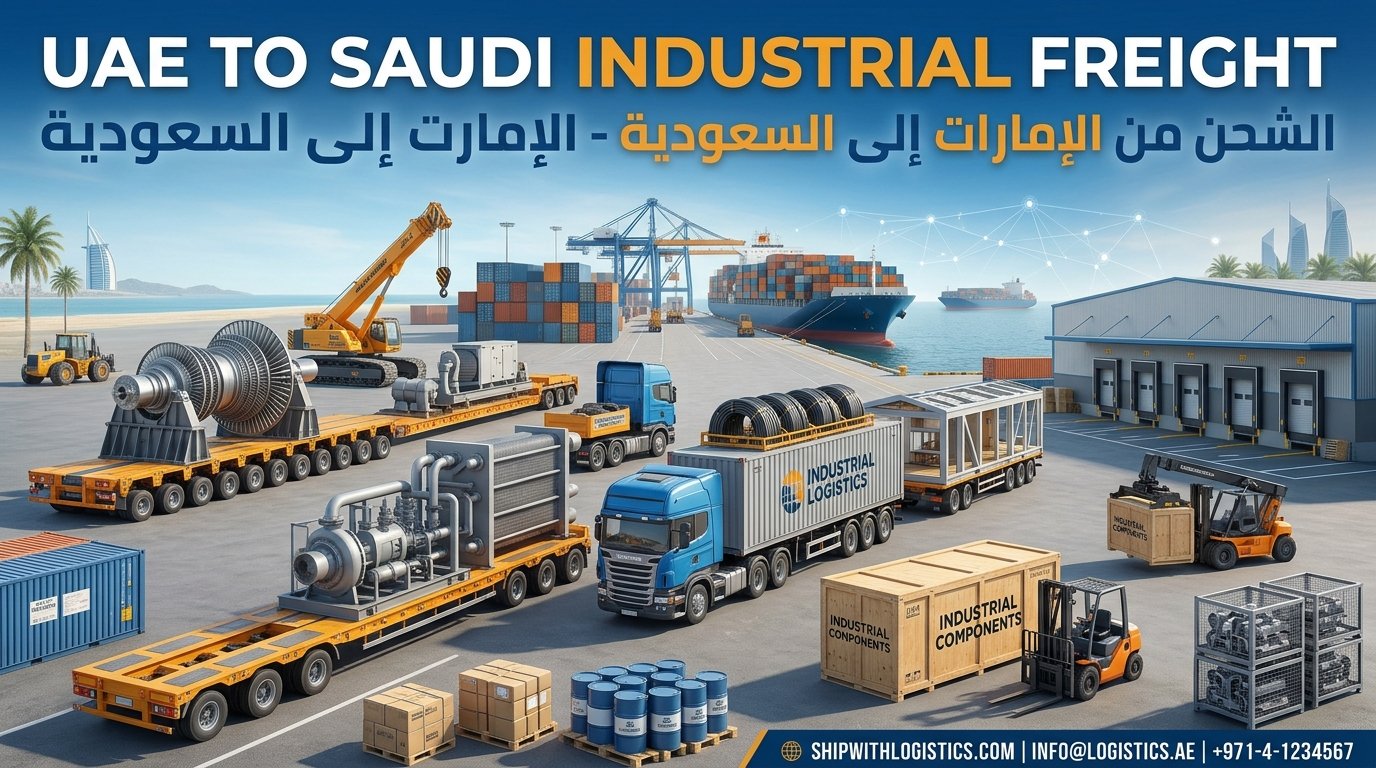
UAE to Saudi machinery shipping and industrial freight services play an important role in supporting businesses, construction projects, manufacturing industries, and infrastructure development across the Gulf region. With strong commercial connections between the United Arab Emirates (UAE) and Saudi Arabia, companies regularly transport heavy machinery, industrial equipment, construction materials, and oversized cargo between the two countries.
Whether you need to move an excavator from Dubai to Riyadh, transport industrial equipment from Sharjah to Dammam, or deliver heavy cargo to a construction project in Jeddah, choosing the right freight transportation service is essential.
International machinery transportation requires proper planning, suitable vehicles, customs documentation, and professional cargo handling. A reliable logistics partner can help businesses reduce transportation delays, manage shipping costs, and ensure that valuable equipment reaches its destination safely.
In this guide, we explore UAE to Saudi machinery shipping and industrial freight solutions, including transportation methods, customs procedures, benefits, shipping costs, and important considerations for businesses.
Understanding UAE to Saudi Industrial Freight Services
UAE to Saudi industrial freight refers to the transportation of industrial goods, machinery, equipment, and commercial cargo from the United Arab Emirates to different destinations across Saudi Arabia.
This service supports several industries, including:
- Construction and infrastructure
- Oil and gas
- Manufacturing and production
- Agriculture and farming
- Engineering and industrial development
- Warehousing and distribution
- Energy and power generation
Major UAE logistics and industrial centres such as Dubai, Abu Dhabi, Sharjah, and Ajman regularly connect with Saudi commercial destinations, including Riyadh, Jeddah, Dammam, Jubail, and other industrial areas.
Businesses depend on reliable freight services to maintain their supply chains, complete projects on schedule, and move essential equipment between facilities.
Types of Machinery and Industrial Cargo Transported
Different industries require different types of freight transportation. The correct shipping solution depends on cargo weight, dimensions, value, and handling requirements.
1. Heavy Construction Machinery
Construction machinery is among the most common types of equipment transported between the UAE and Saudi Arabia.
Examples include:
- Excavators
- Bulldozers
- Wheel loaders
- Cranes
- Road rollers
- Motor graders
- Forklifts
- Backhoe loaders
These machines often require lowbed trailers or specialized heavy-haul transportation.
2. Industrial Machinery and Manufacturing Equipment
Manufacturing companies frequently transport machinery between industrial facilities and production centres.
Common cargo includes:
- Production machines
- Industrial generators
- Air compressors
- Hydraulic equipment
- Packaging machinery
- Processing systems
- Factory equipment
- Metalworking machinery
Sensitive or high-value machinery may require additional protection and specialized handling.
3. Oil and Gas Equipment
Saudi Arabia and the UAE have significant oil and gas industries that depend on specialized equipment and industrial supply chains.
Freight transportation may include:
- Industrial pumps
- Compressors
- Pipeline equipment
- Drilling components
- Mechanical systems
- Heavy industrial parts
Certain shipments may require additional technical documentation or regulatory approvals.
4. Oversized and Project Cargo
Oversized cargo refers to equipment or materials that exceed standard transportation dimensions or weight limits.
Examples include large industrial structures, production units, specialized machinery, and construction components.
These shipments may require special trailers, route surveys, permits, and escort arrangements.
Transportation Methods for UAE to Saudi Machinery Shipping
Selecting the correct transportation method is essential for safe and efficient industrial freight delivery.
Lowbed Trailer Transportation
Lowbed trailers are widely used for transporting heavy construction equipment and oversized machinery.
Their low platform makes them suitable for equipment with greater height requirements.
Key benefits include:
- Suitable for heavy machinery
- Lower loading height
- Improved clearance for tall equipment
- Suitable for long-distance road transportation
- Flexible options for different machinery dimensions
Flatbed Trailer Transportation
Flatbed trailers are suitable for industrial cargo that can be safely loaded and secured on an open platform.
They are commonly used for transporting:
- Machinery components
- Steel structures
- Industrial materials
- Construction equipment
- Commercial cargo
Enclosed Cargo Transportation
Some industrial goods require protection from dust, weather, and external conditions.
Enclosed transportation is particularly useful for sensitive machinery, electrical equipment, and valuable industrial components, provided the cargo fits within the vehicle’s dimensions and weight limits.
Specialized Heavy Haulage
Very heavy or oversized industrial equipment may require specialized transportation arrangements.
These can include:
- Hydraulic trailers
- Multi-axle trailers
- Modular transport systems
- Specialized lifting equipment
- Route planning and transportation permits
The transportation provider should assess the cargo before recommending a suitable vehicle.
Customs Clearance for UAE to Saudi Industrial Freight
Customs clearance is one of the most important stages of cross-border machinery shipping.
Although the UAE and Saudi Arabia are both GCC members, businesses must still comply with applicable customs procedures, import regulations, and documentation requirements.
Depending on the shipment, commonly required documents may include:
- Commercial invoice
- Packing list
- Certificate of origin, where applicable
- Transport documents
- Customs declaration
- Machinery specifications
- Serial numbers and equipment details
- Import permits or regulatory approvals, where required
The customs classification, country of origin, and applicable GCC trade rules can affect duties and other charges.
Businesses should also check whether their machinery requires conformity assessments or approvals under relevant Saudi technical regulations.
Working with an experienced customs clearance agent can help prevent documentation errors and unnecessary border delays.
Benefits of Professional UAE to Saudi Industrial Freight
Choosing a professional industrial freight service provides several advantages for businesses.
1. Safe and Secure Transportation
Heavy machinery and industrial equipment can represent a significant financial investment.
Professional transportation providers use appropriate trailers, loading equipment, and cargo-securing methods to reduce the risk of damage during transit.
2. Efficient Project Management
Construction and industrial projects often operate according to strict deadlines.
Reliable freight planning helps coordinate collection, transportation, customs clearance, and final delivery.
3. Cost Management
Selecting the correct trailer and transportation method can help businesses control logistics expenses.
Accurate cargo measurements and advance planning also reduce the possibility of unexpected transportation costs.
4. Specialized Equipment Handling
Different types of machinery require different loading and unloading arrangements.
Experienced logistics teams can coordinate forklifts, cranes, hydraulic systems, and other equipment according to shipment requirements.
5. Cross-Border Logistics Support
Professional freight providers can assist with transportation documentation, customs coordination, route planning, and delivery arrangements.
This allows businesses to focus on their main operations while their cargo transportation is managed professionally.
Factors Affecting UAE to Saudi Industrial Freight Costs
Industrial freight costs vary according to shipment specifications and transportation requirements.
The main factors include:
Cargo Weight: Heavy shipments may require multi-axle or specialized trailers.
Cargo Dimensions: Oversized equipment can require additional permits and route arrangements.
Transportation Distance: The pickup and delivery locations influence fuel, driver, and operational expenses.
Trailer Selection: Flatbed, lowbed, enclosed, and hydraulic trailers have different transportation costs.
Customs Requirements: Applicable customs duties, taxes, clearance charges, and regulatory approvals may affect the total budget.
Loading and Unloading: Specialized cranes, forklifts, and lifting services can increase transportation expenses.
For an accurate quotation, businesses should provide the cargo type, dimensions, weight, collection location, and final delivery destination.
How to Prepare Machinery for Shipping from UAE to Saudi Arabia
Proper cargo preparation helps ensure a smooth transportation process.
Follow these important steps:
- Inspect the equipment: Check the machinery for existing damage before transportation.
- Measure the cargo: Record accurate length, width, height, and weight.
- Prepare documentation: Arrange commercial invoices, packing lists, and relevant origin documents.
- Secure loose components: Ensure detachable parts are properly packed or secured.
- Follow safety requirements: Prepare fuel systems, batteries, and fluids according to applicable transport regulations.
- Arrange loading equipment: Confirm whether cranes or forklifts are needed.
- Verify destination access: Ensure the delivery location has sufficient space for unloading.
- Confirm insurance coverage: Review available cargo insurance and transportation liability arrangements.
Good preparation helps reduce handling problems, delays, and unexpected expenses.
Choosing the Right UAE to Saudi Freight Company
Selecting an experienced freight provider is essential for successful industrial cargo transportation.
Before choosing a logistics company, consider the following factors:
- Experience in UAE to Saudi cross-border transportation
- Knowledge of industrial freight requirements
- Availability of lowbed and flatbed trailers
- Heavy machinery transportation capabilities
- Customs documentation support
- Professional loading and unloading arrangements
- Transparent quotations
- Cargo insurance options
- Reliable shipment communication
- Delivery planning and coordination
A suitable freight partner should understand your shipment requirements and recommend a transportation solution based on cargo specifications.
Tips for Reducing Industrial Freight Delays
Businesses can improve their shipping experience by planning transportation in advance.
Consider these practical recommendations:
- Book transportation early for oversized machinery.
- Provide accurate cargo measurements.
- Check customs requirements before dispatch.
- Prepare all necessary documents in advance.
- Confirm special permit requirements.
- Coordinate loading and unloading schedules.
- Choose an appropriate trailer.
- Maintain regular communication with the freight provider.
These simple measures can improve logistics efficiency and help businesses manage their supply chains more effectively.
Why UAE to Saudi Industrial Freight Is Important for GCC Businesses
Trade and industrial development across the GCC depend on efficient transportation networks.
The UAE serves as an important regional logistics and commercial hub, while Saudi Arabia continues to develop major industrial, infrastructure, construction, and manufacturing projects.
Reliable machinery shipping and industrial freight services help businesses:
- Move essential equipment between countries.
- Support construction and infrastructure projects.
- Maintain manufacturing operations.
- Improve regional supply chain efficiency.
- Access industrial machinery and specialized equipment.
- Coordinate large-scale commercial projects.
As cross-border business activities continue to grow, professional freight transportation remains an important part of regional trade.
Conclusion
UAE to Saudi machinery shipping and industrial freight services are essential for businesses involved in construction, manufacturing, oil and gas, and infrastructure development. Transporting industrial machinery successfully requires suitable trailers, accurate documentation, customs compliance, and professional cargo handling.
Whether you are shipping an excavator, forklift, generator, factory machine, or oversized industrial equipment, choosing the right transportation solution can help reduce delays, manage costs, and protect valuable cargo.
Planning your shipment carefully and working with an experienced logistics provider can make cross-border transportation more efficient and reliable.

