
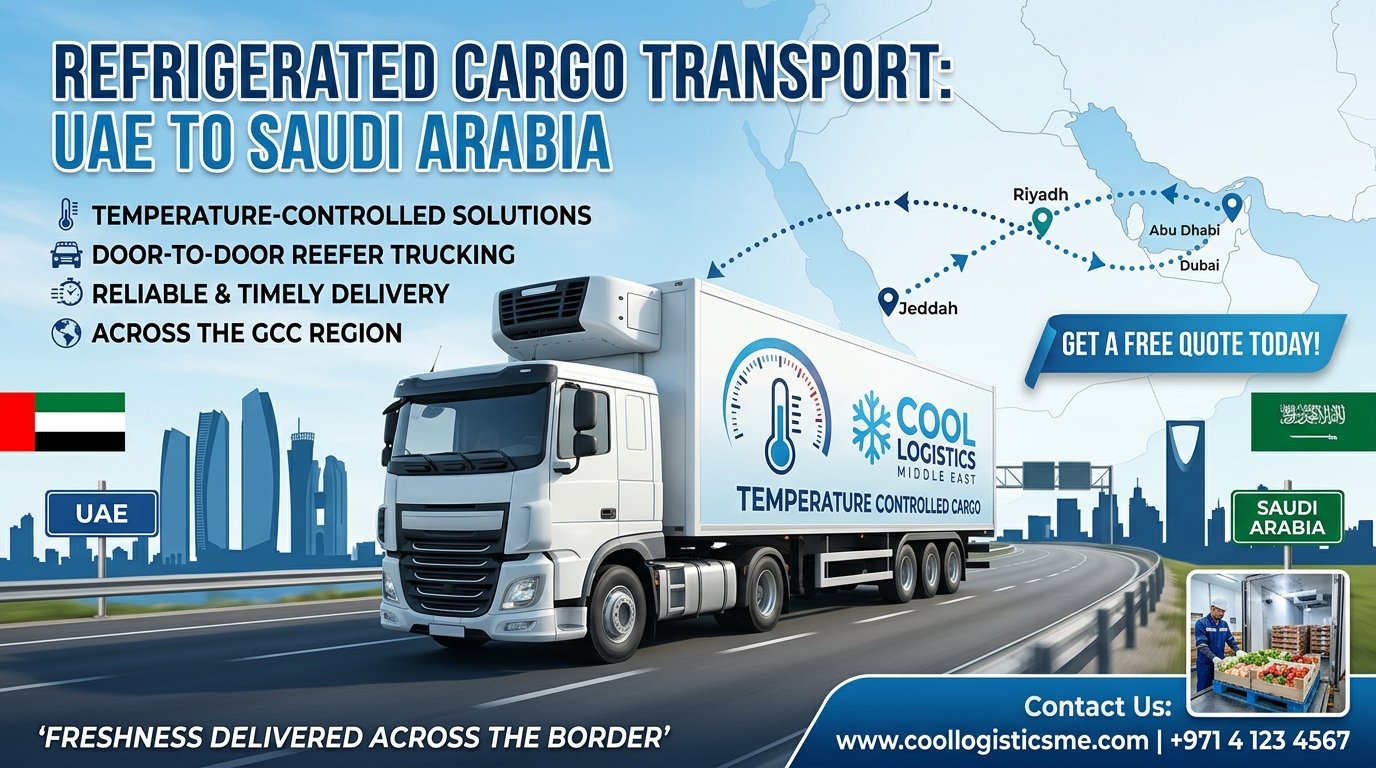
Reliable Temperature-Controlled Transportation
Transporting temperature-sensitive goods between the UAE and Saudi Arabia requires careful planning, reliable logistics, and proper temperature management. UAE to Saudi refrigerated cargo services play an important role in keeping perishable products fresh, safe, and in excellent condition throughout the journey. From fresh fruits and vegetables to frozen foods, dairy products, pharmaceuticals, and other temperature-sensitive items, refrigerated transportation helps businesses move goods across borders without compromising product quality.
The UAE and Saudi Arabia have strong trade connections, creating growing demand for dependable cross-border cold chain logistics. Choosing the right refrigerated cargo solution helps businesses reduce product losses, maintain delivery schedules, and meet the required transportation and food safety standards.
In this article, we explore how refrigerated cargo transportation works between the UAE and Saudi Arabia, its key benefits, important features, and what businesses should consider when selecting a logistics provider.
What Is UAE to Saudi Refrigerated Cargo?
UAE to Saudi refrigerated cargo refers to the transportation of temperature-sensitive products from the United Arab Emirates to Saudi Arabia using specially equipped refrigerated vehicles.
These vehicles, commonly known as reefer trucks, are designed to maintain controlled temperatures during transportation. Their refrigeration systems help protect cargo from external heat and changing weather conditions.
This service is particularly important in the Gulf region, where high temperatures can affect the quality and safety of perishable goods.
Common products transported through refrigerated cargo include:
- Fresh fruits and vegetables
- Frozen meat, poultry, and seafood
- Dairy products such as milk, cheese, and yogurt
- Frozen and chilled food products
- Pharmaceutical and medical supplies
- Flowers and other temperature-sensitive products
- Certain chemicals and industrial materials requiring controlled temperatures
Depending on the cargo requirements, transportation temperatures can be adjusted to maintain suitable conditions throughout the journey.
Why Is Refrigerated Cargo Important Between the UAE and Saudi Arabia?
The UAE and Saudi Arabia are important trading partners in the Middle East. Businesses regularly transport food products, commercial goods, and temperature-sensitive materials between the two countries.
However, transporting these products over long distances in hot weather presents several challenges.
Refrigerated transportation helps address these challenges by providing:
1. Product Freshness
Temperature-controlled vehicles help maintain the freshness of fruits, vegetables, dairy products, and other perishable goods.
2. Food Safety
Maintaining the correct temperature reduces the risk of spoilage and helps protect food quality during transportation.
3. Reduced Product Losses
Uncontrolled temperatures can damage valuable cargo. Refrigerated trucks help minimize spoilage and financial losses.
4. Reliable Delivery
Professional cold chain logistics providers plan transportation routes and monitor cargo conditions to support timely deliveries.
5. Better Business Operations
Companies can manage regular shipments more efficiently with dependable refrigerated transportation services.
Key Features of UAE to Saudi Refrigerated Transportation
When selecting a refrigerated cargo service, businesses should consider the equipment, temperature monitoring systems, vehicle condition, and transportation arrangements.
Here are some important features of professional refrigerated transportation.
1. Temperature-Controlled Reefer Trucks
Refrigerated trucks are equipped with cooling systems that maintain specific temperature ranges according to cargo requirements.
Different products require different storage conditions. For example, frozen products need lower temperatures than fresh fruits and vegetables.
2. Continuous Temperature Monitoring
Temperature monitoring helps ensure that cargo remains within its required temperature range.
Modern refrigerated transportation systems may include digital monitoring equipment that allows logistics teams to track temperature conditions during transit.
3. Insulated Cargo Compartments
Reefer trucks use insulated cargo compartments to reduce the effect of outside temperatures.
This insulation supports refrigeration performance and helps maintain stable conditions during long-distance transportation.
4. Experienced Logistics Professionals
Professional drivers and logistics teams understand the challenges of cross-border cargo transportation.
Their experience helps with route planning, shipment coordination, documentation, and delivery management.
5. Cross-Border Transportation Support
Shipping refrigerated goods from the UAE to Saudi Arabia requires appropriate customs documentation and compliance with applicable import and export requirements.
A reliable logistics provider can help coordinate the transportation process and reduce unnecessary delays.
Types of Refrigerated Cargo Services from UAE to Saudi Arabia
Different businesses have different transportation requirements. Refrigerated cargo services can be arranged according to shipment size, product type, and delivery needs.
Chilled Cargo Transportation
Chilled transportation is suitable for products that must remain cool without freezing.
Common examples include:
- Fresh fruits and vegetables
- Dairy products
- Chilled meat
- Fresh seafood
- Certain beverages
Frozen Cargo Transportation
Frozen cargo transportation is designed for products that require consistently low temperatures.
Typical shipments include:
- Frozen chicken
- Frozen beef and lamb
- Frozen seafood
- Frozen vegetables
- Ice cream and other frozen food products
Pharmaceutical Refrigerated Transportation
Some pharmaceutical and medical products require carefully controlled temperatures throughout transportation.
Specialized cold chain arrangements may include validated packaging, temperature monitoring, and documented handling procedures.
Commercial Refrigerated Cargo
Restaurants, supermarkets, food distributors, wholesalers, and manufacturers often require regular refrigerated shipments between the UAE and Saudi Arabia.
Dedicated transportation arrangements can help businesses maintain consistent supply chains.
Benefits of Choosing Professional UAE to Saudi Refrigerated Cargo Services
Working with an experienced refrigerated cargo provider offers several advantages for businesses involved in international trade.
Maintains Product Quality
The primary benefit of refrigerated transportation is maintaining the required temperature conditions. This helps preserve product quality from collection to final delivery.
Supports Longer-Distance Transportation
Refrigerated trucks are designed for long-distance journeys and can help transport temperature-sensitive products across international borders.
Helps Reduce Spoilage
Proper refrigeration, insulation, and temperature monitoring reduce the risk of cargo damage caused by unsuitable temperatures.
Improves Supply Chain Efficiency
Reliable transportation allows businesses to coordinate inventory, warehouse operations, and product distribution more effectively.
Provides Flexible Shipping Options
Businesses can arrange transportation based on their cargo volume, delivery schedules, and temperature requirements.
Builds Customer Confidence
Delivering products in good condition helps businesses maintain customer satisfaction and build long-term commercial relationships.
UAE to Saudi Refrigerated Cargo: Important Transportation Routes
Several major routes connect the UAE with Saudi Arabia. The appropriate route depends on the collection location, delivery destination, border arrangements, and cargo requirements.
Common transportation routes include:
- Dubai to Riyadh
- Dubai to Dammam
- Dubai to Jeddah
- Abu Dhabi to Riyadh
- Sharjah to Dammam
- Abu Dhabi to Jeddah
- Ajman to major Saudi commercial destinations
The journey time depends on distance, traffic, customs clearance, border procedures, and weather conditions.
Professional logistics planning helps businesses select suitable routes and coordinate deliveries efficiently.
Documents Required for Refrigerated Cargo from UAE to Saudi Arabia
Cross-border transportation requires proper documentation. The exact documents depend on the type of products being shipped and applicable regulations.
Common documents may include:
- Commercial invoice
- Packing list
- Certificate of origin
- Transport documentation
- Customs declaration
- Relevant import permits
- Health or phytosanitary certificates for applicable products
- Product-specific approvals and certificates
Food and pharmaceutical shipments may have additional regulatory requirements. Businesses should verify the latest requirements with the relevant Saudi and UAE authorities before shipping.
How to Choose the Right Refrigerated Cargo Company
Selecting a reliable transportation provider is essential for protecting valuable temperature-sensitive shipments.
Consider the following factors before making a decision:
1. Refrigerated Fleet Availability: Choose a company with properly maintained refrigerated vehicles suitable for your cargo.
2. Temperature Management: Confirm that the provider can maintain and monitor the temperature required for your products.
3. Cross-Border Experience: Look for experience in UAE-to-Saudi transportation and knowledge of relevant customs procedures.
4. Delivery Reliability: Ask about estimated transit times, route planning, and shipment coordination.
5. Cargo Handling Standards: Ensure that loading, unloading, and transportation procedures meet your product requirements.
6. Transparent Pricing: Request a clear quotation covering transportation, border-related arrangements, and any additional charges.
Tips for Safe and Efficient Refrigerated Cargo Transportation
Businesses can improve shipment quality and reduce transportation risks by following a few practical steps:
- Pre-cool the refrigerated vehicle when required.
- Ensure products are stored at their recommended temperatures before loading.
- Use suitable food-grade packaging where applicable.
- Avoid overloading the refrigerated vehicle.
- Maintain proper airflow around the cargo.
- Monitor temperatures throughout transportation.
- Prepare customs documentation before dispatch.
- Coordinate delivery schedules with the receiving warehouse.
- Use appropriate loading and unloading procedures.
These practices help maintain cold chain integrity and support safe cargo delivery.
Conclusion
UAE to Saudi refrigerated cargo services are essential for businesses transporting fresh food, frozen products, dairy items, pharmaceuticals, and other temperature-sensitive goods across the Gulf region. With suitable refrigerated vehicles, professional handling, temperature monitoring, and proper customs coordination, businesses can protect product quality and improve supply chain efficiency.
Choosing an experienced refrigerated cargo provider helps reduce transportation risks, minimize product losses, and ensure dependable cross-border deliveries. Whether you require chilled, frozen, or specialized temperature-controlled transportation, investing in the right logistics solution can make a significant difference to your business.

